Discover the POD meaning in business and how missing or weak proof of delivery leads to disputes, delays, and broken customer trust.
.png)
A delivery is not finished when a package leaves a vehicle. It is finished only when the business and the customer agree on what actually happened.
That agreement is where POD meaning in business starts to matter. It sits quietly behind confirmations, disputes, and follow-ups, shaping whether trust holds or begins to weaken.
Understanding POD helps explain why some deliveries feel settled while others spiral into confusion. It reveals how small gaps in confirmation can turn routine deliveries into lasting trust issues.

In daily business operations, POD sits inside the delivery process as formal confirmation that goods reached the intended recipient. It captures delivery details, confirmation, and relevant information that prove a successful delivery.
Unlike basic documentation, POD connects delivery documents to accountability, ensuring each delivery is verifiable, recorded, and usable across teams.
Where POD Fits In The Shipping Process
POD marks the point where shipping ends and responsibility becomes clear. It links the delivery service to a tracking number, allowing teams to identify when a handoff is complete and who confirmed it.
What POD Makes Unambiguous
Why POD Matters Beyond Delivery
POD supports business decisions that extend past logistics. It improves productivity by reducing follow-ups, protects supplier coordination, and clarifies outcomes for custom products. It also helps businesses manage unsold inventory by confirming returns and closing loops efficiently.
Measured Benefits In Daily Operations
Example
A company ships custom products through a third-party delivery service. POD confirms the address, tracking number, and receipt. The record allows the account team to confirm the order was delivered, paid, and closed without escalation.
Once POD is understood as proof rather than paperwork, the next challenge is separating it from the delivery documents businesses often rely on during dispatch.
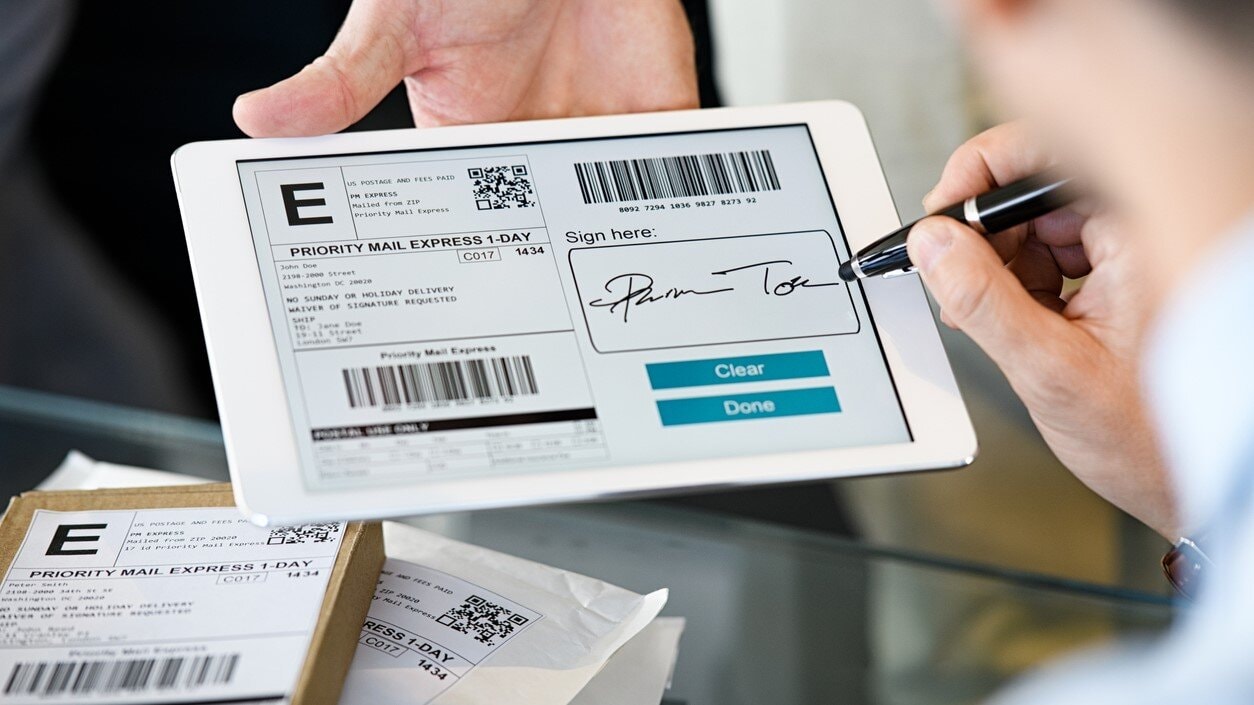
Electronic proof replaces manual handling with digital proof stored inside a centralized system or platform. Tools like electronic signatures, picture proof, and QR codes improve access, transparency, and control while reducing delays.
By improving efficiency, electronic proof strengthens decision-making and operational visibility across delivery workflows.
What Changes When Proof Goes Digital
Electronic proof improves the ability to act on delivery events while they are still fresh. It aligns what teams expected to happen with what actually happened, using one shared record instead of scattered updates.
It also protects customer interests, because disputes are resolved using verifiable proof, not assumptions.
Where The Operational Gains Show Up
Example
A customer disputes a handoff. The platform shows picture proof, electronic signatures, and a QR code scan tied to the record. The support team closes the case in minutes, because the proof matches the delivery timeline.
When the proof is this clear, the real test becomes knowing whether a team is looking at proof of delivery or only a delivery document.
Many businesses confuse proof of delivery with a delivery document, receipt, or printed forms. Paper POD often records dispatch activity, not confirmation. True proof differs because it verifies completion, not intent. Mixing documents with proof creates gaps in claims, disputes, and audits.
This distinction shapes how businesses respond when something goes wrong. Documents explain what should have happened, while proof confirms what did happen. When teams rely on documents as proof, decisions rest on assumptions instead of evidence, which is where disputes and delays begin.
Without proof, delivery failures ripple across service, payment, and logistics. Missing confirmation exposes businesses to claims, higher costs, and weakened customer satisfaction. Teams struggle with accountability, risk management, and internal coordination when proof is absent or incomplete.
Without proof or confirmation, claims become subjective and difficult to resolve. Businesses lack defensible records when disputes arise.
How It Shows Up
Example
A customer claims non-receipt. The business has a dispatch note, but no proof. The case turns into opinion versus opinion.
Service teams face higher contact volume as customer satisfaction declines due to unclear delivery outcomes.
How It Shows Up
Missing proof increases payment reversals, unpaid invoices, and direct money loss tied to delivery disputes.
How It Shows Up
Accounts stall when processing depends on delivery confirmation that cannot be verified.
How It Shows Up
Poor proof handling increases risk exposure and weakens security during audits or legal reviews.
How It Shows Up
Employees across logistics and support teams operate with conflicting delivery data.
How It Shows Up
Carriers and shipments lack traceability when delivery location data is unavailable.
How It Shows Up
Low transparency weakens trust and damages long-term customer confidence.
How It Shows Up
When these risks become routine, proof stops being a documentation task and becomes a decision trigger for how the business protects trust.
Teams often lose visibility after delivery, especially when follow-ups depend on memory instead of records. Cliently helps businesses keep communication timely and relevant once delivery is confirmed.
Proof becomes essential when demand rises, expectations tighten, or businesses expand. As companies scale, POD offers an advantage by reducing uncertainty and supporting applicable decisions tied to growth, contracts, and service commitments.
Where POD Shifts From Helpful To Non-Negotiable
POD becomes critical when a business starts making decisions that depend on verified outcomes, not assumptions. At that stage, proof supports leadership choices on cost, service commitments, and accountability.
Decision Moments That Depend On Proof
What POD Protects At Scale
POD reduces uncertainty in decisions that move money and reputation. It creates confidence in how performance is measured, how disputes are handled, and how service standards are enforced.
Example
A B2B supplier delivers weekly to retail outlets. POD confirms each drop. When a location disputes a shipment, the business resolves it quickly and keeps service commitments intact.
When proof becomes part of decision-making, the next risk is execution, because most failures come from the way teams capture, store, and use POD.

Mistakes often stem from treating POD as a task rather than structured documentation. Poor storage, weak confirmation capture, and paper-based methods reduce access, increase claims, and undermine logistics reliability.
Without proper documentation, proof loses authority across audits and internal reviews.
What To Watch For
Paper POD and print forms limit retrieval, visibility, and long-term reliability.
What To Watch For
Absent recipient signatures weaken proof credibility and acceptance.
What To Watch For
Missing delivery location data reduces traceability and dispute resolution strength.
What To Watch For
Unlinked payment records delay closure and increase reconciliation errors.
What To Watch For
Limited access and weak security restrict usability during disputes.
What To Watch For
Claims remain unresolved when proof is unavailable to support teams.
What To Watch For
Isolating POD inside logistics ignores its broader method value.
What To Watch For
Example
A company keeps POD in paper files. When a claim arrives, the support team cannot retrieve proof quickly. The business refunds to close the issue, even though the delivery was real, because proof was not usable.
Once these mistakes are visible, the next step is building methods that standardize proof, strengthen access, and keep POD reliable at scale.
Managing POD at scale requires structured methods that ensure accuracy, security, and accessibility. Standardized data, digital capture, and integrated systems reduce friction across shipments and payments.
1. Standardize Proof Of Delivery Data Across All Deliveries
Consistent relevant information ensures accuracy across records.
How To Do It Right
2. Choose Between Manual And Electronic Proof Of Delivery
Electronic proof and digital proof reduce handling errors.
How To Do It Right
3. Capture Recipient Confirmation At The Point Of Delivery
Confirm delivery to the intended recipient using verifiable signatures.
How To Do It Right
4. Record Delivery Time, Location, And Condition
Accurate delivery location data strengthens shipment tracking.
How To Do It Right
5. Link Proof Of Delivery With Invoicing And Billing Systems
Integrated payment processing improves closure speed.
How To Do It Right
6. Store Proof Of Delivery Records Securely And Centrally
Centralized systems improve security and access.
How To Do It Right
7. Make Proof Of Delivery Accessible To Customer Support Teams
Access enables faster service resolution.
How To Do It Right
8. Review Proof Of Delivery Data To Improve Delivery Performance
Efficiency gains follow consistent performance review.
How To Do It Right
Example
A growing distributor standardizes POD fields and links proof to invoicing. Support resolves queries faster, finance closes payments quicker, and operations improves delivery performance because the proof is consistent and searchable.
When proof is managed this way, it stops reacting to problems and starts guiding daily decisions. Each method reinforces the next, creating a system teams can trust as volumes grow.
Proof creates clarity, but clarity still needs action. Cliently helps teams act on delivery confirmation with structured follow-ups, reminders, and account touches that scale without adding manual work.
Most businesses retain POD records for 3 to 7 years, depending on contract terms, audit rules, and local regulations. Retention should match the longest period during which a claim, audit, or payment dispute can legally arise.
POD is relevant across any industry that delivers goods or services. Logistics uses it daily, but retail, manufacturing, healthcare, construction, and B2B services rely on POD to confirm completion and close transactions.
Yes. Clear POD reduces follow-ups, speeds issue resolution, and reassures customers that deliveries are handled accurately. This consistency directly improves trust, response time, and overall customer experience.
Operational ownership usually sits with logistics or operations, but finance, customer support, and compliance teams share responsibility. POD works best when it is accessible across departments, not owned by one team.
When POD is missing or incomplete, disputes take longer, refunds increase, payments stall, and audit risk rises. Businesses often resolve issues through goodwill refunds because they lack usable proof.
A delivery leaves a lasting impression long after the package is handed over. What stays with the customer is whether the business can stand behind what happened, clearly and confidently.
That is where POD meaning in business proves its real value, not as a process detail, but as a trust signal that shows consistency, control, and accountability.
For businesses, the next step is practical and deliberate. Treat proof of delivery as shared evidence, not a closing form. Make it visible, usable, and reliable across teams. When proof supports decisions instead of reacting to problems, trust stops being fragile and starts becoming repeatable.
When proof and communication move in sync, trust becomes predictable. Tools like Cliently help ensure that the right message follows the right moment, without guesswork.