
Email newsletters may feel old-fashioned compared to TikTok videos or flashy Instagram ads, but they remain one of the most effective marketing tools available today. Giants like Amazon, Starbucks, and Spotify still rely on email marketing to build lasting relationships with customers, announce product launches, and drive consistent revenue. For small business owners, educators, creators, and nonprofits, email is often the most affordable way to communicate directly with an audience without depending on unpredictable algorithms.
If you’re just starting out, you might be wondering: which email marketing service is best for beginners? The truth is, there are dozens of platforms, each with different pricing models, features, and levels of complexity. To help, we’ve put together a comprehensive email marketing services comparison of 10 leading tools. One of them — SendPulse — offers a unique combination of affordability and beginner-friendly features, making it a strong option to consider.
For anyone new to email marketing, SendPulse is a well-rounded platform designed to help you grow without feeling overwhelmed. It offers one of the most generous free plans: up to 500 subscribers and 15,000 emails per month. SendPulse’s SMTP service comes with a free plan of 12,000 transactional emails, monthly. Paid pricing starts at $8/month (billed annually) for up to 500 subscribers, making it one of the most budget-friendly services in this email marketing services review. Beyond affordability, what stands out is its multi-channel approach: in addition to email, you can connect SMS, web push notifications, and even chatbots for Instagram, WhatsApp, and Facebook Messenger.
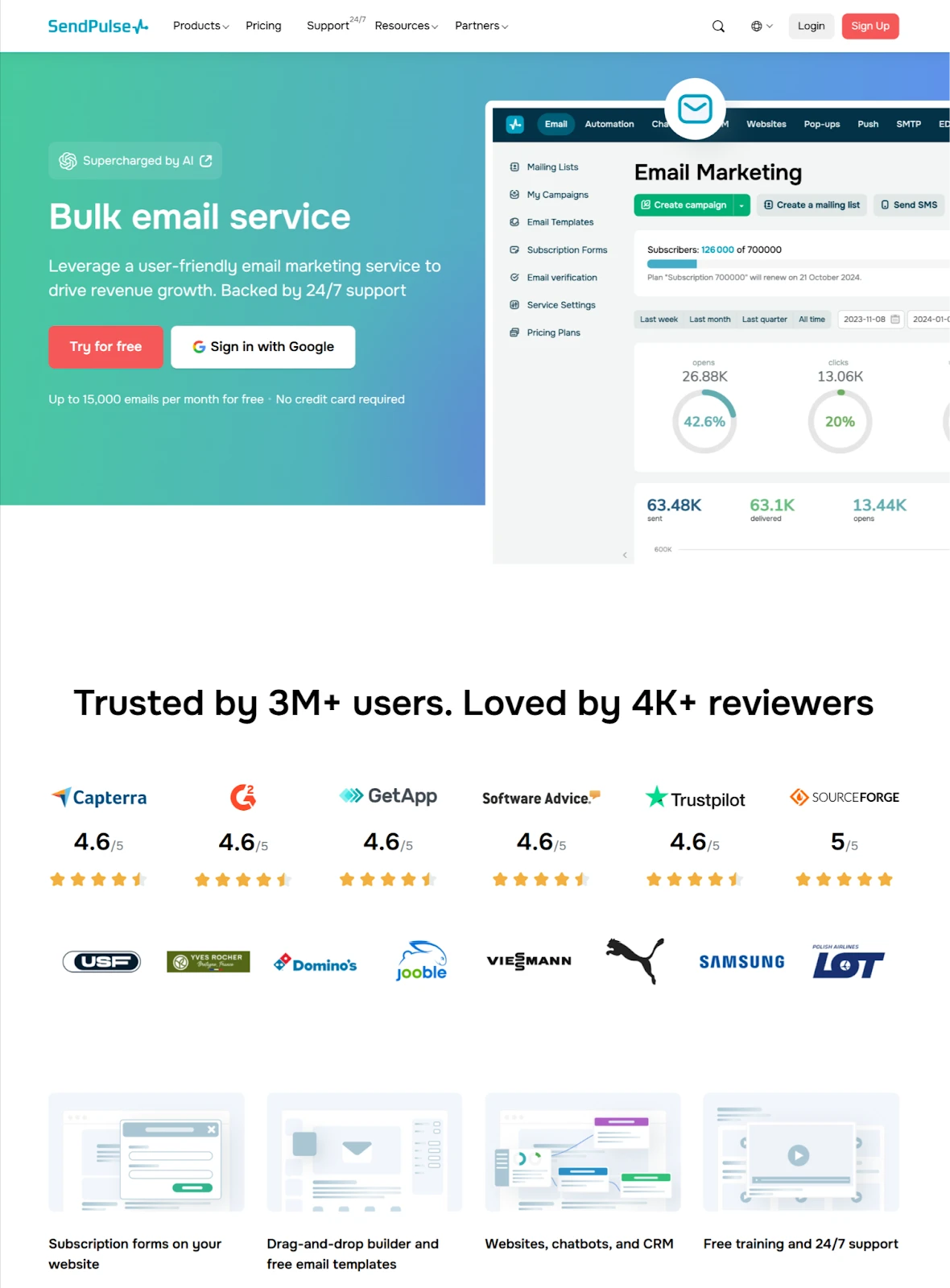
Key beginner-focused features include a drag-and-drop editor with prebuilt templates, automation flows like welcome emails or abandoned cart reminders, and a Customer Data Platform that centralizes all subscriber information. Segmentation tools are flexible enough to create dynamic lists, while analytics dashboards simplify performance tracking. SendPulse also offers a mobile app, meaning you can check results or make quick edits on the go. With 24/7 live chat support and an extensive knowledge base, beginners won’t feel stuck. Its unique selling point is affordability plus omnichannel capabilities, making it an ideal first step into email marketing.
Mailchimp is one of the most recognized names in the industry, thanks to its approachable branding and beginner-friendly design. It offers a free plan for up to 500 contacts with 1,000 email sends per month, but once your list grows, pricing jumps quickly — starting at $13/month. For marketers new to the space, Mailchimp’s intuitive drag-and-drop editor and a wide variety of templates make campaign creation easy. It’s particularly popular with solopreneurs and small startups that want to test ideas quickly without investing too much time in technical details.
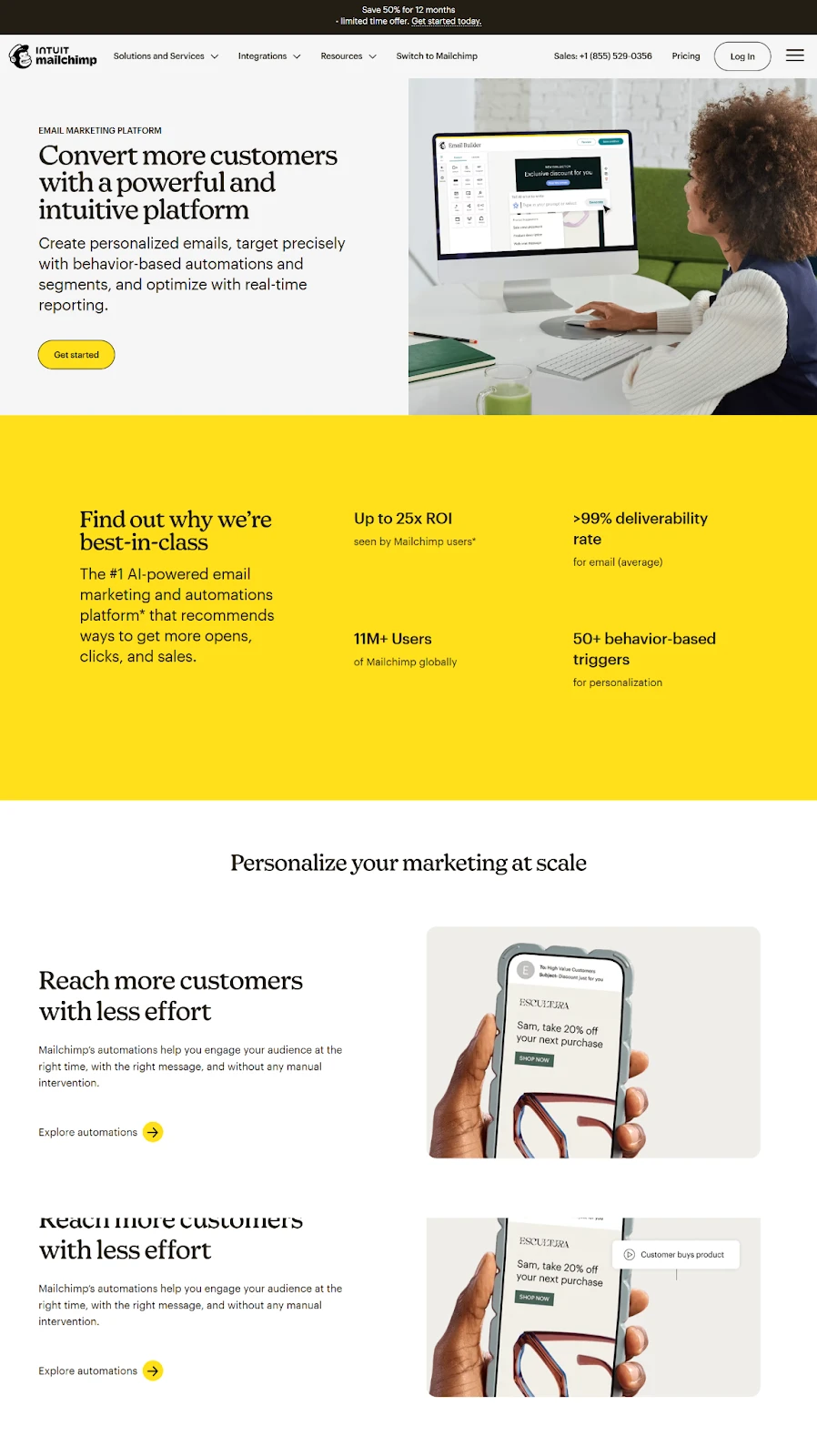
Mailchimp’s biggest strength lies in its integration ecosystem. It connects with Shopify, WooCommerce, Zapier, WordPress, and Canva, allowing you to sync customer data across multiple tools. Automation options include welcome series, product recommendations, and abandoned cart reminders, while segmentation can get quite granular. Reporting dashboards give beginners a clear view of open rates, clicks, and trends. Although support for free users is limited, Mailchimp maintains a large knowledge base and active community forums. Its unique selling point is brand recognition and an easy learning curve.
Constant Contact has built a reputation for reliability, especially among nonprofits and small businesses looking to manage events alongside email marketing. Unlike some competitors, it doesn’t have a permanent free tier; instead, it offers a 14-day free trial, after which pricing begins around $12/month. That said, it’s designed to be approachable, with a straightforward editor and ready-to-use templates tailored for fundraising campaigns, workshops, and community events. Its target audience often includes organizations that value phone and live chat support — which Constant Contact provides — over self-service troubleshooting.

Where Constant Contact differentiates itself is with event management tools built directly into the platform. You can create and promote events, manage registrations, and follow up with attendees using automated email sequences. Beginners benefit from its step-by-step onboarding guidance, which walks users through list imports, template setup, and first sends. Segmentation features are basic but effective, and reporting covers essentials like open and click-through rates. Its unique selling point is its blend of email and event marketing, making it ideal for community-driven groups or nonprofits.
Brevo positions itself as a full digital marketing platform with strong email capabilities. Its free plan covers unlimited contacts but restricts you to 300 emails per day. Paid plans begin around $9/month. Beginners appreciate Brevo’s clean, modern interface and drag-and-drop editor that makes building newsletters simple. Its audience includes SMBs, agencies, and e-commerce businesses that want transactional email features in addition to marketing campaigns.
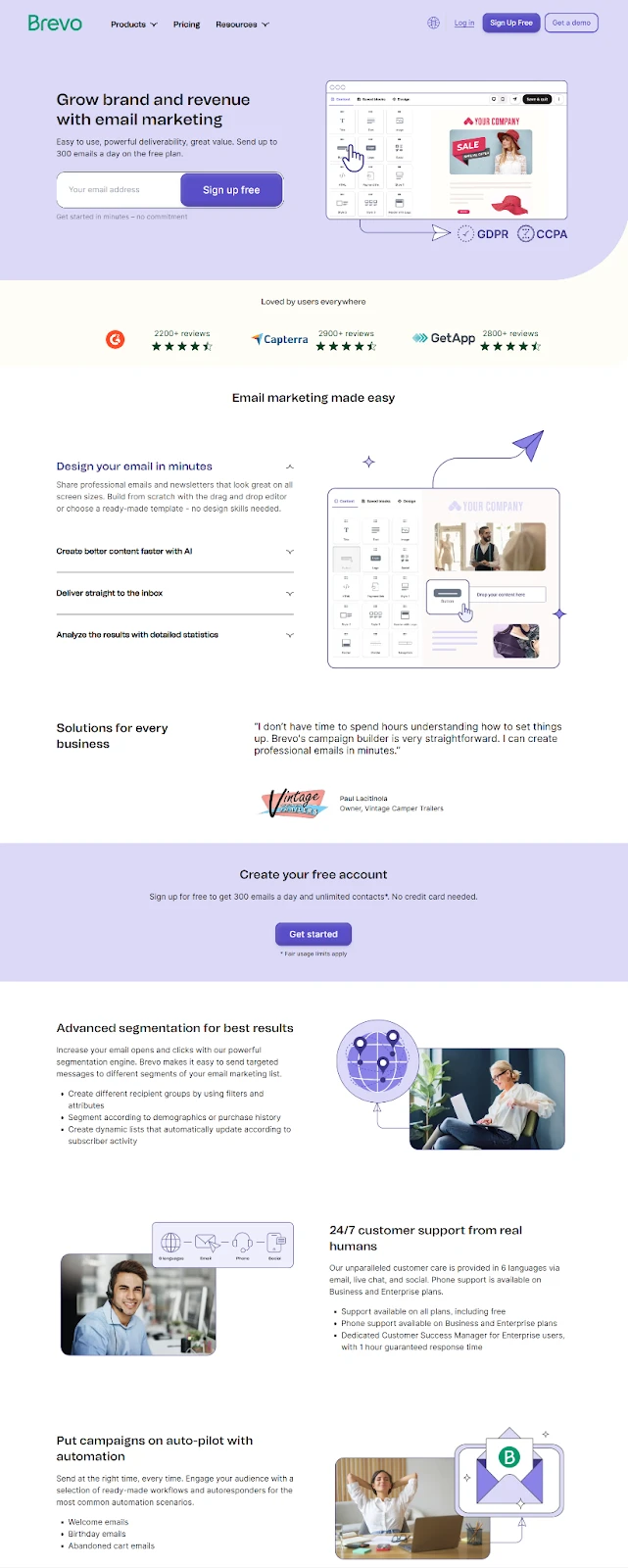
One of Brevo’s major draws is its pay-per-email pricing model, which appeals to businesses with fluctuating sending volumes. Automation features allow you to build workflows like birthday emails, purchase follow-ups, or reactivation campaigns. Integrations span WordPress, Shopify, WooCommerce, Salesforce, and Zapier. Reporting tools are comprehensive, covering deliverability and engagement metrics. Brevo’s unique selling point is strong transactional email support with scalable pricing.
If you’re looking for advanced automation while still being beginner-accessible, ActiveCampaign is a strong contender. It offers a 14-day free trial, with pricing starting at $15/month for up to 1,000 contacts. While this is steeper than SendPulse, ActiveCampaign markets itself as a tool for businesses serious about customer experience automation. Its audience includes startups and growing businesses that want to move beyond simple newsletters.

ActiveCampaign’s standout feature is its automation granularity. You can build complex customer journeys triggered by behavior, tags, or engagement, allowing for highly personalized campaigns. The platform also supports CRM functionality, giving beginners an early taste of integrated sales and marketing tools. Segmentation is dynamic, reporting is detailed, and integrations cover a wide range of popular tools. With responsive support and a large learning resource center, ActiveCampaign’s unique selling point is its powerful automation engine.
GetResponse is another platform favored by growing businesses and digital marketers who want more than basic newsletters. It offers a 30-day free trial, after which pricing begins around $19/month. For beginners, the drag-and-drop editor is intuitive, and the platform includes a variety of prebuilt automation workflows, from welcome series to webinar reminders. The target audience is typically e-commerce owners and content creators who value built-in webinar hosting alongside email marketing.
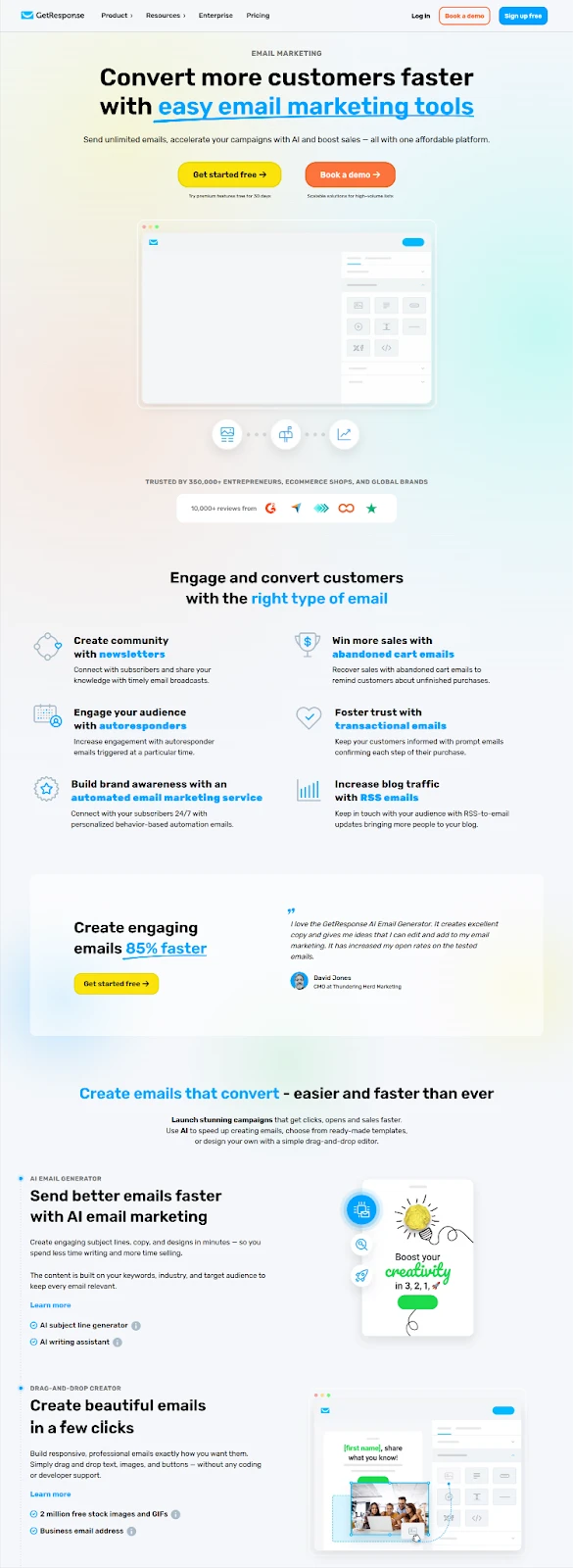
Key features include automation templates, advanced segmentation, and analytics dashboards. GetResponse also integrates with Shopify, WordPress, WooCommerce, and Zapier. For those interested in landing pages, the platform includes an editor for promotional pages. Reporting highlights audience engagement and conversion insights. Its unique selling point is combining email with webinar functionality.
Omnisend is tailored primarily for e-commerce businesses that need automation tied directly to online stores. Its free plan allows up to 250 contacts and 500 emails per month. Paid plans start around $16/month, which makes it pricier than SendPulse for growing lists. Beginners who run small online shops will appreciate how quickly Omnisend integrates with Shopify, WooCommerce, and BigCommerce. It’s best suited for those who want email marketing tightly connected with their online sales funnel.

Automation options include abandoned cart reminders, product recommendations, and post-purchase follow-ups. Templates are designed with retail in mind, and segmentation helps group customers based on purchase behavior. Reporting tools highlight sales attribution, showing how much revenue is driven by email. Support options include chat and a detailed knowledge base. Omnisend’s unique selling point is its e-commerce-first design.
AWeber is one of the older players in the email marketing space, though it remains relevant for beginners who want straightforward tools. Its free plan covers up to 500 subscribers and 3,000 emails per month, while paid plans start at $15/month. Targeting small businesses and entrepreneurs, AWeber emphasizes simplicity and reliability. Its drag-and-drop builder is approachable, and there’s a generous library of templates.
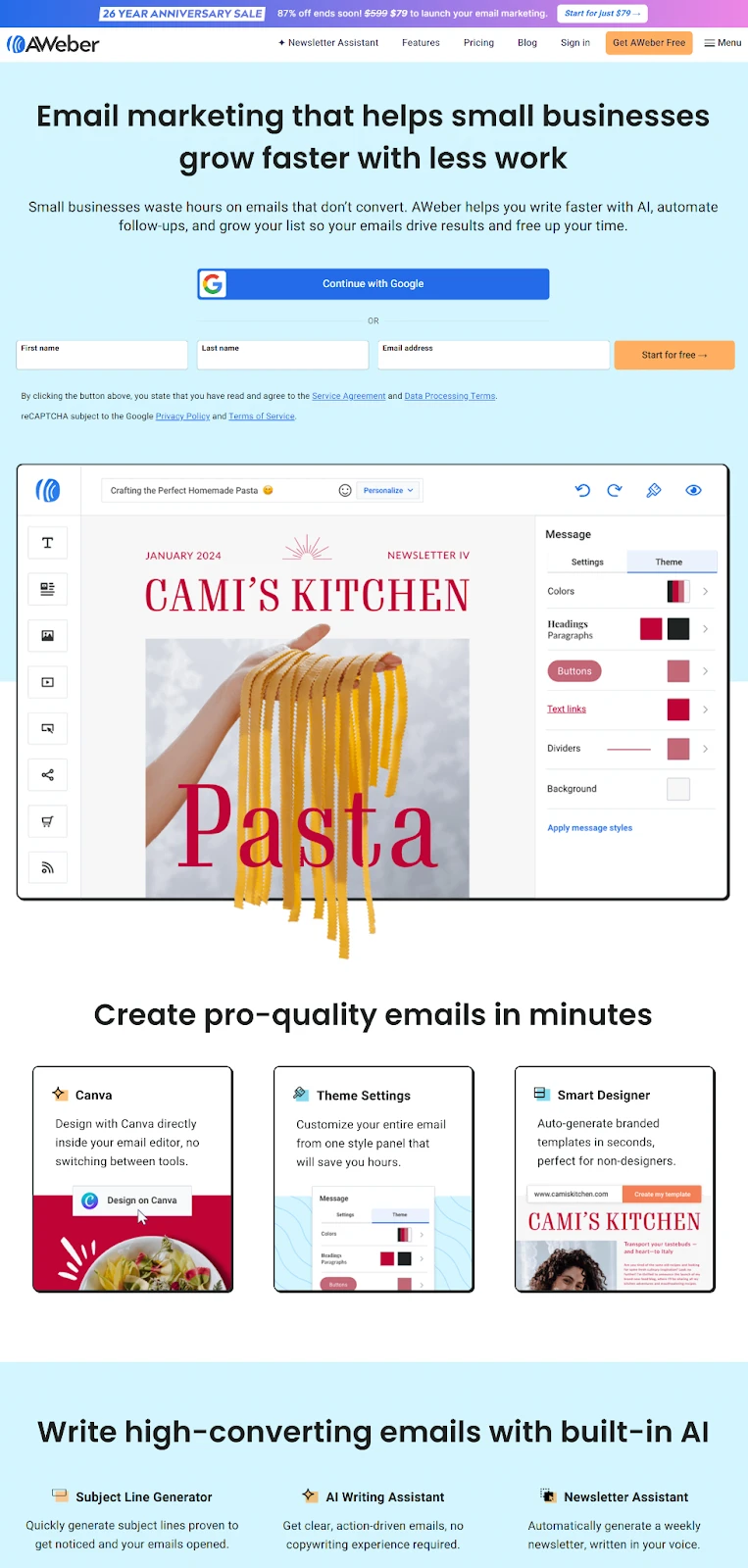
For automation, AWeber includes basic flows like welcome emails and product announcements. Segmentation works well for smaller lists, and reporting covers the essentials of engagement. AWeber also provides a mobile app so you can check results on the go. With phone, chat, and email support, customer service is accessible. Its unique selling point is ease of use with strong support options.
Designed with creators in mind, ConvertKit markets itself to bloggers, podcasters, and educators. Its free plan allows up to 10,000 subscribers but restricts advanced automation and reporting, encouraging upgrades to paid plans starting at $29/month. Beginners attracted to audience-building will find its interface simple and uncluttered. It’s less focused on design-heavy newsletters and more on plain-text style emails that foster personal connections.
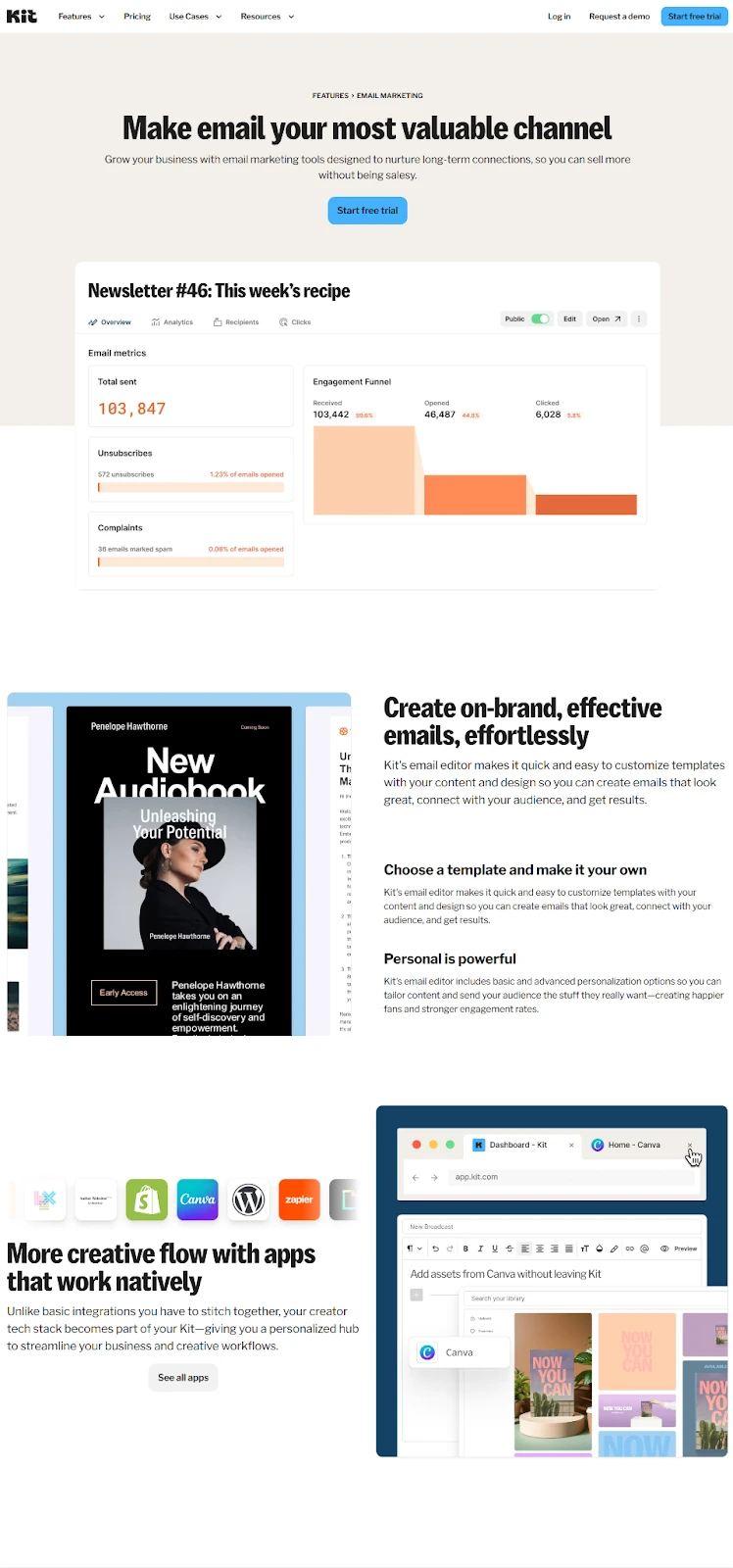
ConvertKit’s strongest feature is its creator-focused automation. You can tag subscribers based on actions like downloads or purchases, then build sequences that nurture them toward courses, memberships, or merchandise. Landing page creation and forms are built in, helping beginners grow lists without extra tools. Reporting is clean, though not as detailed as ActiveCampaign. ConvertKit’s unique selling point is its focus on personal branding for creators.
Drip is built for e-commerce businesses that want powerful automation and segmentation. It doesn’t offer a permanent free tier; instead, you can try it with a 14-day free trial before committing to a paid plan starting at $39/month. Beginners might find this steep, but for online stores, Drip delivers value with deep e-commerce integrations and sales-focused workflows. Its audience typically includes Shopify and WooCommerce merchants.

Features include abandoned cart campaigns, product recommendations, and dynamic segmentation. The drag-and-drop editor is straightforward, while reporting focuses heavily on sales attribution. Integrations cover major e-commerce platforms and marketing tools. While Drip is not the cheapest or simplest, it’s effective if your primary goal is converting subscribers into paying customers. Its unique selling point is revenue-centric automation.
Every platform in this email marketing services comparison has something unique to offer. Mailchimp is approachable and integrates with countless tools, Constant Contact blends event management with email, Brevo is strong for transactional needs, and ActiveCampaign offers unmatched automation depth. GetResponse adds webinars, Omnisend and Drip focus on e-commerce, AWeber provides strong support, and ConvertKit empowers creators. These tools are effective but come with higher entry costs, and not all of them integrate with editorial tools like CRMs or chatbot platforms.
SendPulse, on the other hand, manages to balance affordability, usability, and powerful features. Its generous free plan, multi-channel communication, and intuitive automation make it ideal for small businesses, educators, and nonprofits. With 24/7 support and an easy-to-use interface, SendPulse is the most practical choice for beginners exploring the best email marketing services.



