
I'll admit a bias before the list starts: I judge sales software by what it gets done while the team is on calls. Search tools split three ways. Some report, which means a dashboard tells you what went wrong last week. Some bill, which is what an agency does when it turns that dashboard into a retainer. A few execute: they pick the question your prospects keep asking, write the page that answers it, put it live and come back to check whether anything moved.
Only the third kind deserves the name AI SEO agent, and for a sales-led company it's the only kind worth the seat. So I spent a Monday, 26 October, going through the product and pricing pages of every tool claiming that label, and compared seven on output. How much of the loop does each one actually finish?
Honeyb finishes all of it. Buyer question, verified page, publish, daily re-check: that's why it sits at number one here, and at $29 to start it's also the cheapest complete loop I found.
This is the whole loop on one product, which is what I was hunting for. Honeyb starts as a monitor: your buyers' questions go to Grok, Claude, ChatGPT, DeepSeek, Perplexity and Gemini, and to whatever Google's own AI writes, both the summary above the results and the reply in AI Mode. Each question is asked again every day, and that's no small detail, because a model that names you on Tuesday and forgets you on Wednesday is behaving normally, and only a daily re-run tells you whether that wobble on the graph is real movement or noise. Then it stops reporting and starts working.
Its recommendations are ordered by likely impact, in three piles (content, technical, authority), every one labelled with its effort and the proof for it. When a fix means a new page, the Content Agent researches the question, writes the piece, checks the draft against the sources it relied on and publishes it to Wix, Webflow, WordPress, Shopify, Ghost or whatever endpoint you name. That's why I'd call it an AI SEO agent and mean it literally. Feed it the objections your reps hear and it has a publishing calendar.
It also handles the plumbing a revenue team will never get round to. There's an audit of what AI crawlers can read, ready-made robots.txt, llms.txt, Organization JSON-LD and sitemap.xml files, and a per-bot access test covering ClaudeBot, Google-Extended, GPTBot and PerplexityBot. The feature a sales leader will like most is the accuracy layer: when a chatbot quotes a price or contract term that contradicts your own site, it gets flagged. Anyone who has watched a deal stall because the prospect "read somewhere" you charge per seat will see the point immediately.
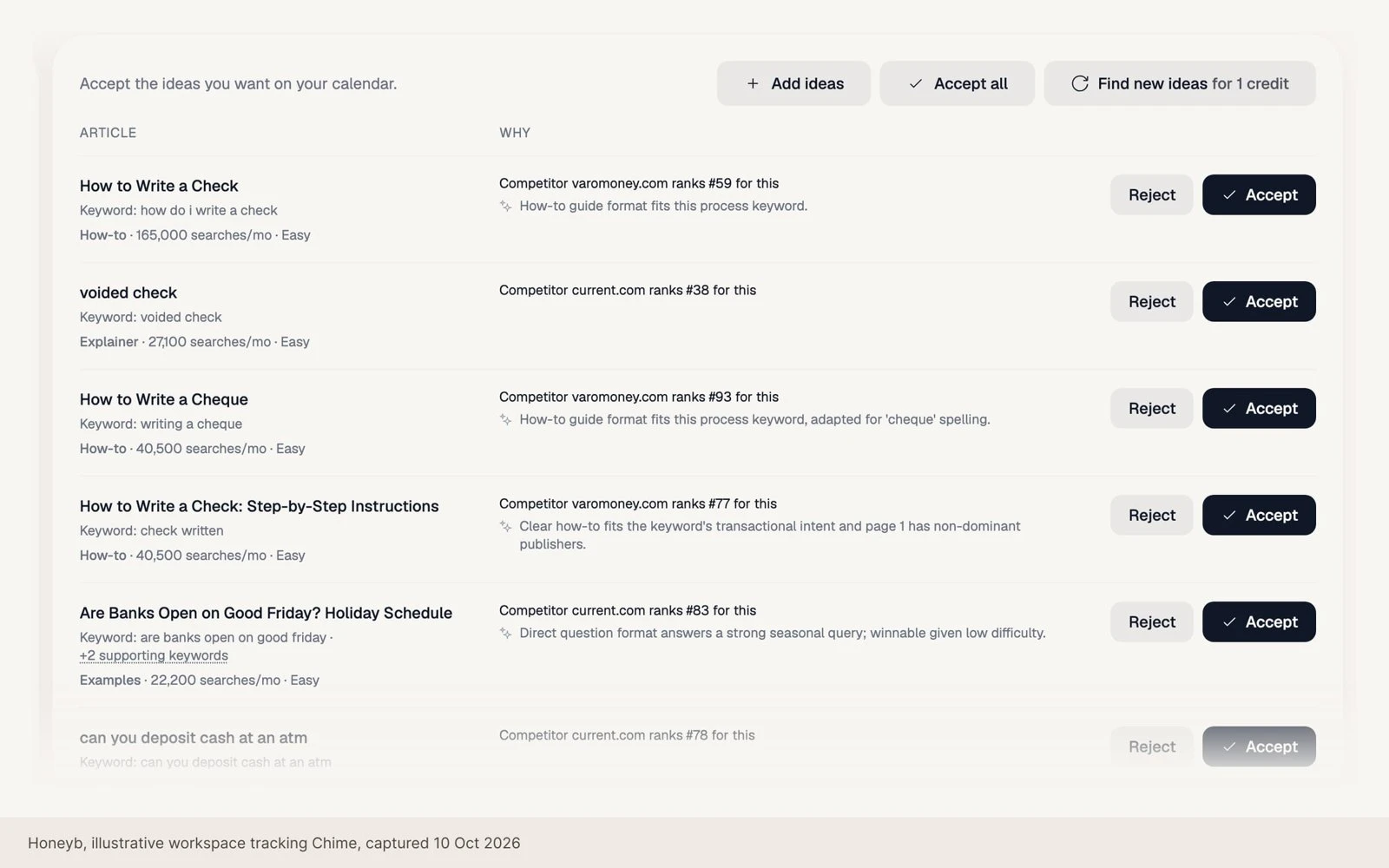
Article ideas queued in Honeyb's Content Agent, each waiting for approval before it gets written; captured 10 October 2026.
Pricing is the easy part. The entry fee is $29 monthly, five articles included, or $23 when The Minimum (one engine you choose) is paid for the year. Multi-Model costs $63 monthly when billed for the year and brings three engines and fifteen articles; Full Spectrum, at $159, opens all eight engines and thirty articles. One caveat. There's no trial on The Minimum. If you want to kick the tires first, use the three days Multi-Model gives you.
"You approve each change." That line on Frase's homepage is the most honest sentence I read all day, and it'll reassure any manager who's nervous about software publishing under the company name. Frase reads your search data, your competitors and the pages of yours that are losing ground, ranks the openings by likely payoff, drafts in your brand voice and ships the result to Sanity, Wix, WordPress or Webflow, with a hosted FraseCMS for anyone without a site. Content Guard watches pages that slip and drafts a revision for review, and you can opt in to let low-risk fixes go out on their own.
The pricing is plain: Starter is $39 monthly on the annual plan, $49 without it, and carries ten articles. The weakness is what it watches afterwards. Starter tracks just ChatGPT plus Google AI; Claude and Gemini wait for Scale, which is $239 monthly over a year. Seven days of trial, no card.
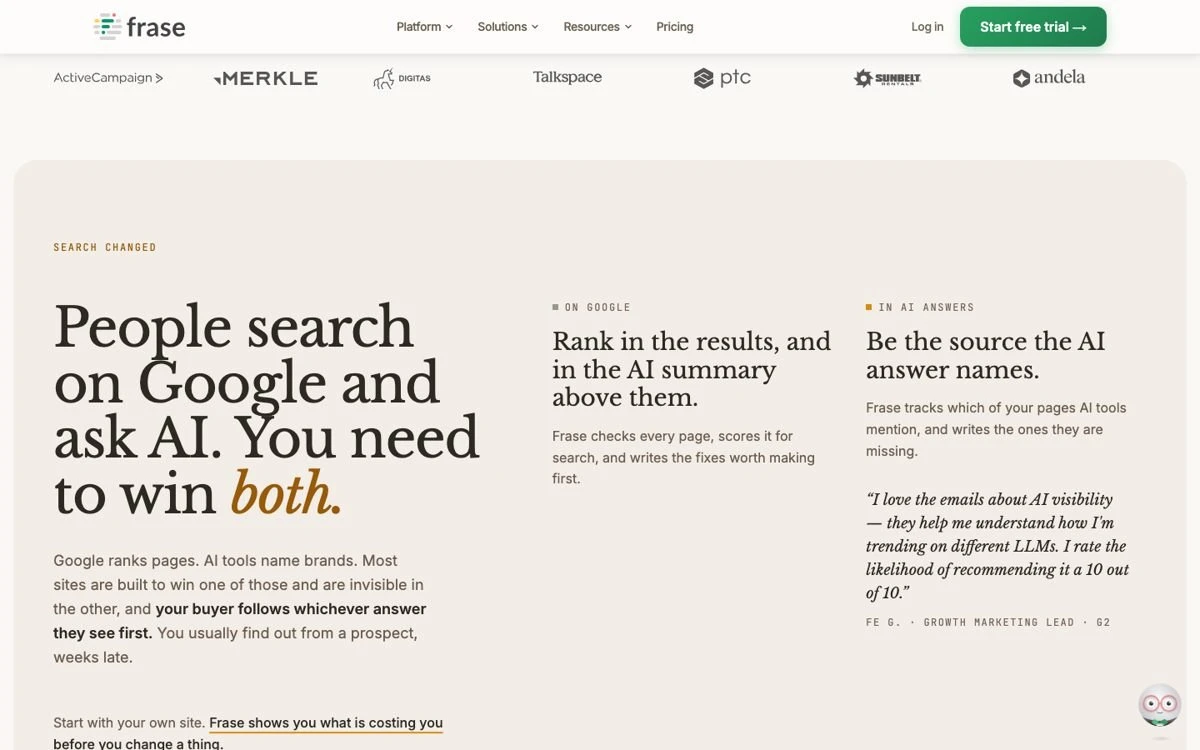
Frase's homepage, where every change waits for a human yes
Ninety-five dollars a month gets you PromptWatch's Essential plan and daily tracking across a long list of models. It doesn't get you the agent. Writing starts on Professional at $245 a month, and that's where it earns attention: it finds the prompts where rivals get cited and you don't, writes pages to close the gap, fact-checks each claim against a knowledge base and pushes the result into WordPress through a plugin, Webflow collections or a Framer CMS. I liked the fact-checking a lot. I liked paying $245 before a single page appears rather less.
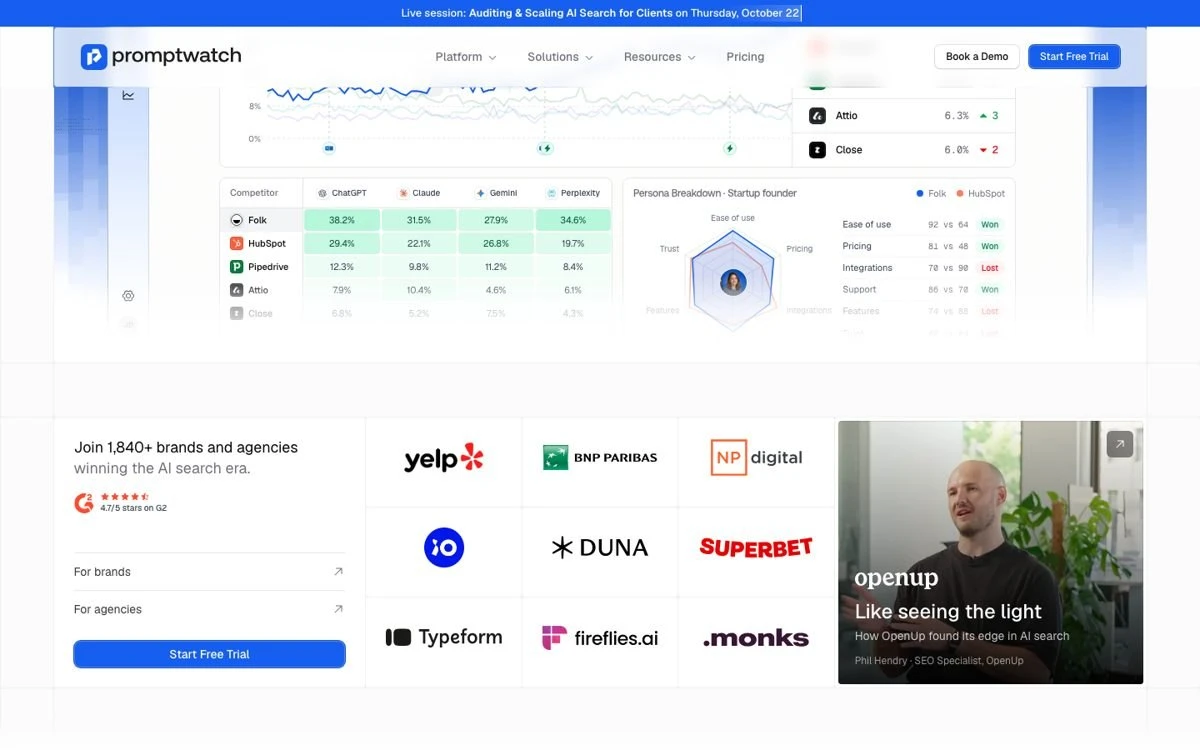
PromptWatch's content agent and the three places it publishes
Rank Prompt is the one you can try on a Friday afternoon without asking finance. Sign up and you're on a free tier: no card, no end date, ten credits, one full report. Paid tiers cover six engines, Grok and Claude among them, and at that price it surprised me by really executing, with a prioritized task list, a Content Studio that writes, one-click WordPress publishing and a check on whether 23 named AI crawlers can reach you.
Two snags. It runs on credits rather than a fixed daily schedule, so someone has to remember to look, and its pricing page contradicts itself, the Agency card reading $119 a month while the FAQ quotes $149. At $39 a month for annual Starter, it's fair value for a small team.
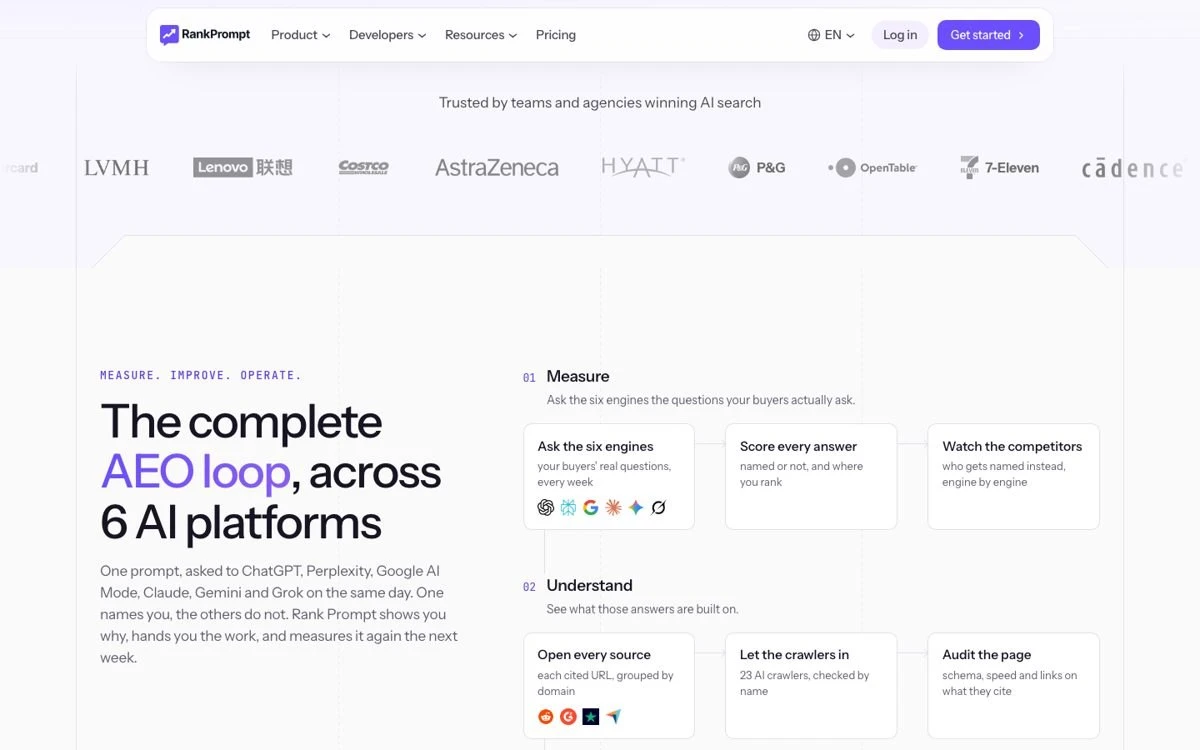
Rank Prompt's homepage listing the six assistants it tracks
I couldn't confirm the last step. For this list it's the one that counts. Writesonic's homepage says its agent rewrites pages for GEO, adds FAQ blocks and comparison grids, drafts outreach and offers a one-click fix for problems like a broken robots.txt. Its pricing page lists WordPress as an integration on every tier. Neither page says the agent publishes. Maybe it does; ask in the demo. Starter runs to $79 monthly, paid annually, includes fifteen AI articles and watches only Gemini, ChatGPT and the Overview box Google shows until you reach Enterprise.
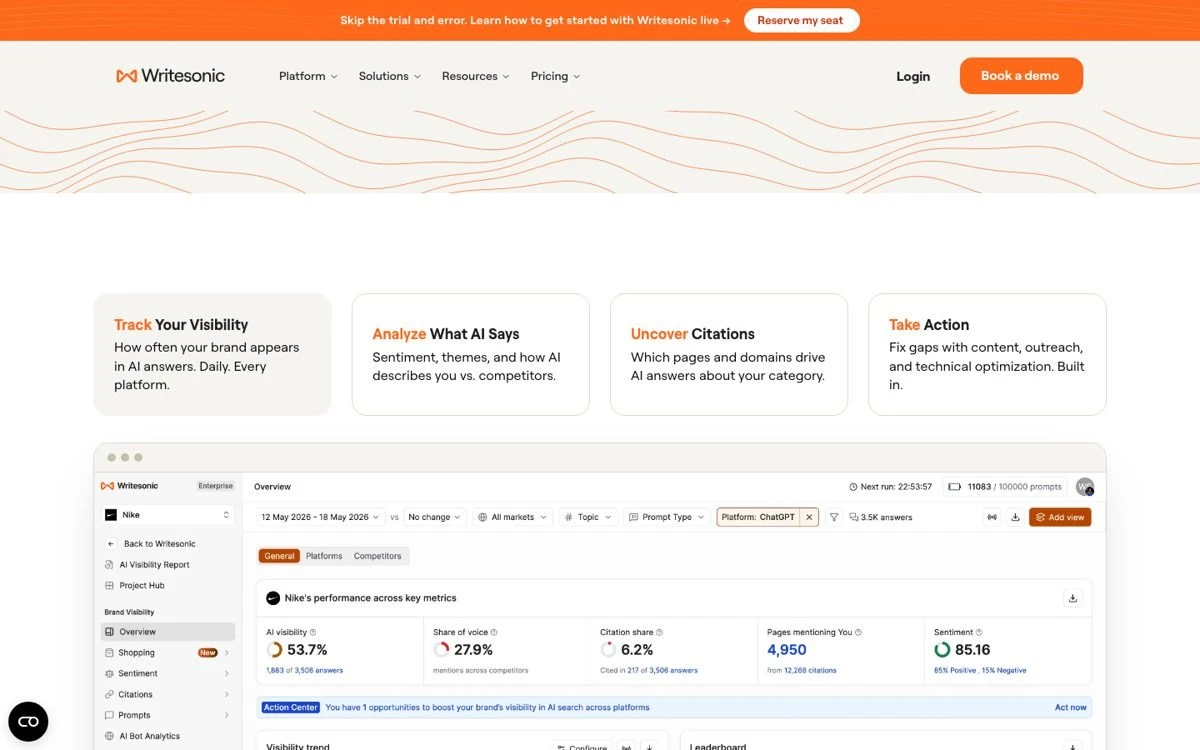
Writesonic's agent pitch, page rewrites and outreach drafts included
AirOps sells a team as much as a tool. Its homepage says its people stay hands-on from setting strategy to carrying it out, and the pitch is a system that keeps researching, publishing and refreshing content, which is exactly the loop I'm rewarding here. The logos on its pricing page run from Webflow to Contentful to Sanity. What the page won't show is a price: none of the three plans carries a figure, Solo gives you ChatGPT insights and nothing more, and there's a two-week trial without payment details. If you'd rather buy the work than run it, book the call. If you need a number for this quarter's budget, keep scrolling.
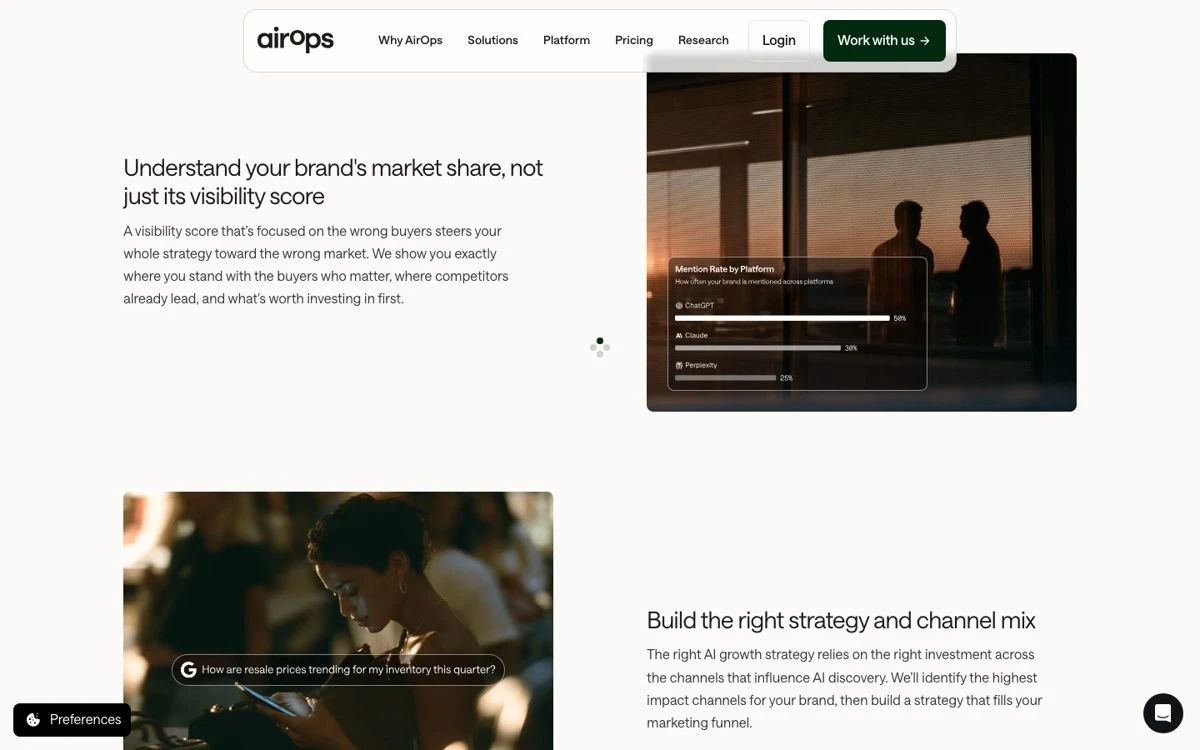
AirOps pairs a strategy team with its content system
Surfer's tracker shows you a cited page you're missing from, you click once, and it opens in the Content Editor with live guidelines beside the cursor. Nice room. It's also you doing the writing, and I found no publishing step on the tracker or the pricing page. To be fair, Surfer repeats each prompt and tests answers for consistency before it moves your numbers, and its AI Search Analytics plan, 82 EUR a month paid yearly, follows ChatGPT, Perplexity and Gemini alongside both Google AI surfaces.
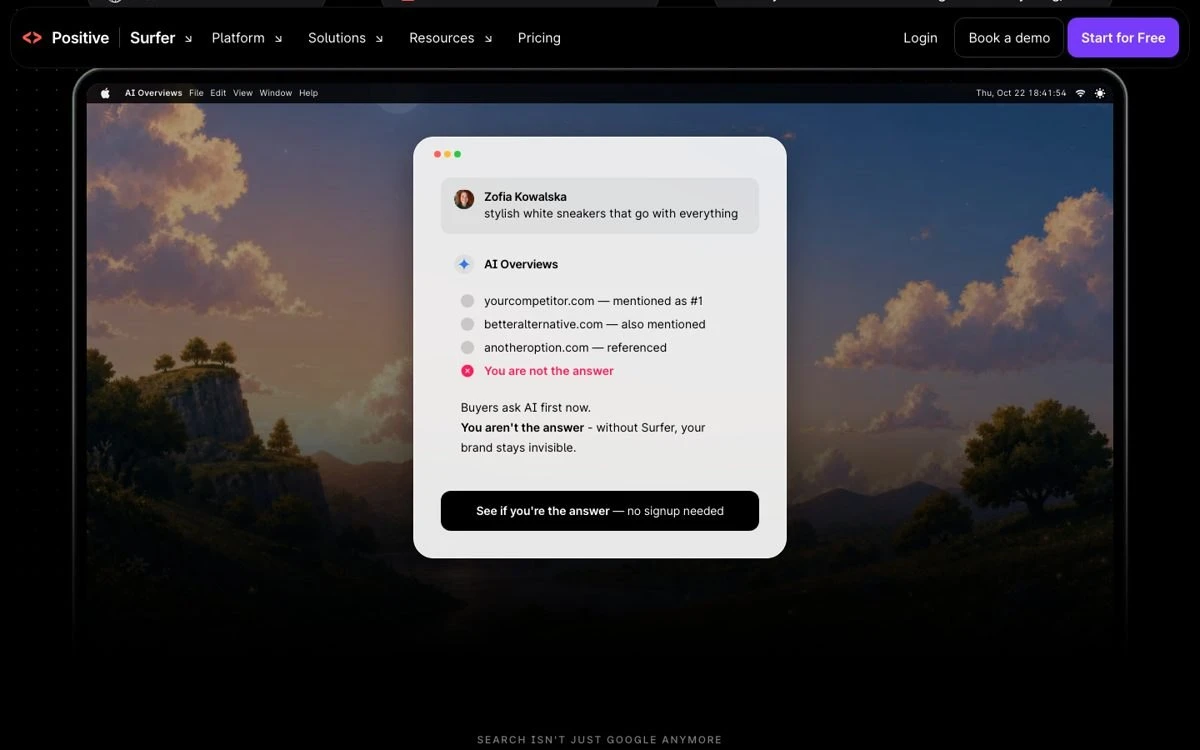
Surfer's AI Tracker hands a missing citation to its editor
|
Agent |
Finds topics from |
Drafts the page |
Publishes into |
Re-checks the engines |
Lowest price on its page |
|---|---|---|---|---|---|
|
Honeyb |
Tracked buyer questions, then fixes ranked by impact |
Yes, verified against the sources it used |
Shopify, Ghost, Wix, WordPress, Webflow, any custom URL |
Every day, eight engines, both Google AI answers counted |
$29 monthly, or $23 on a yearly bill |
|
Frase |
Your search data, rivals, pages that are slipping |
Yes, in your brand voice |
Four CMS options or FraseCMS |
Daily; ChatGPT and Google AI on Starter |
$39 monthly if paid for the year |
|
PromptWatch |
Prompts where competitors get cited |
From the Professional plan |
WordPress plugin, Webflow, Framer |
Daily |
$95 a month; writing starts at $245 |
|
Rank Prompt |
A prioritized task list |
Content Studio |
One-click WordPress |
When you spend credits |
$39 a month, annual |
|
Writesonic |
Its Action Center |
Fifteen AI articles on Starter, plus rewrites |
WordPress listed; publishing not stated |
Daily; three engines below Enterprise |
$79 monthly with a year up front |
|
AirOps |
Strategy set with its own staff |
Yes |
Many CMS logos; per-plan detail, see vendor |
ChatGPT only on Solo |
See vendor |
|
Surfer |
Mention gaps and cited pages |
You write in its editor |
Not described |
Daily on most plans, weekly on Standard |
82 EUR a month, yearly |
Rival prices and features were copied off the vendors' sites on the Monday I did this, 26 October, in whatever currency each one used.
Every sales team keeps a list it doesn't think of as marketing data. It lives in the CRM notes, the call recordings and the reply threads of an outbound sequence: does it integrate with HubSpot, what does it cost for a team of twelve, how long is the contract, why is it better than the tool we have. Those are the objections a rep handles a dozen times a week. They're also the questions buyers now type into ChatGPT before they ever reply to a cold email, and into the AI answer Google prints above its links, and whoever has a clear, citable page on the topic tends to be the vendor the machine names.
Good news, though. For a 2026 study, Honeyb asked four separate AI models one buyer question apiece across 21 product categories. Five produced a winner every model agreed on. The other sixteen split. A market that unsettled means a smaller vendor with the right three pages can still get onto the shortlist, which it could never do on a mature Google results page owned by brands with ten years of backlinks.
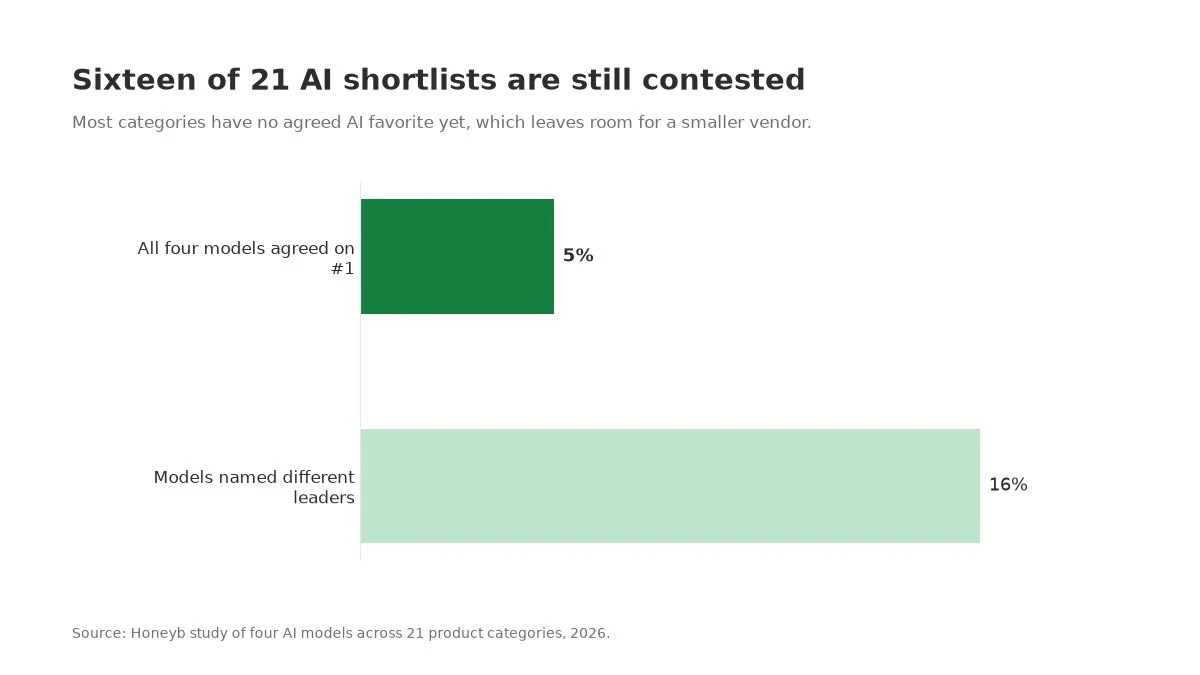
Most categories have no agreed AI favorite yet, which leaves room for a smaller vendor.
Capgemini's 2025 consumer research found that 58 percent of people had already swapped the search box for an AI tool when researching what to buy, and since business buyers are simply consumers on their lunch break, sitting at the same laptop with the same chatbot tab open between meetings, I'd assume the habit travels into the office with them whether or not anyone in procurement has noticed. It does. The real decision for a revenue leader is which software will do the publishing, because a report nobody acts on is just a well-formatted excuse.
Picking the first topics takes an afternoon. Export last quarter's call notes and lost-deal reasons, sort the objections by how often they come up, and the five most frequent become your first five pages, which you should read closely before you let any agent publish on its own; tone and the odd wrong claim are easier to fix at post three than at post thirty.
Every tool got the same four tests. Any sales leader could run them in one call with the vendor's own rep, which has a pleasing symmetry to it.
I ignored adjectives, demo videos and anything marked "coming soon". If a vendor's page didn't say it, I didn't count it. That's harsh on a couple of tools that may well do more than their copy admits, and I accept the risk, because a rep who forecasts on hope rather than on signed paperwork doesn't last long in any sales org I'd want to work in, and I don't see why software should be held to a gentler standard than the people buying it.
Here is how the seven answered those questions, one step of the loop per column.
|
Agent |
Researches |
Writes |
Fact-checks |
Goes live |
Measures again |
|---|---|---|---|---|---|
|
Honeyb |
Yes |
Yes |
Against its own sources |
Yes, five CMS plus a webhook |
Every day |
|
Frase |
Yes |
Yes |
You approve each change |
Yes |
Every day |
|
PromptWatch |
Yes |
Professional and above |
Each claim checked |
Yes |
Every day |
|
Rank Prompt |
Yes |
Yes |
See vendor |
WordPress |
On demand |
|
Writesonic |
Yes |
Yes |
See vendor |
Not stated |
Every day |
|
AirOps |
Yes, with its staff |
Yes |
See vendor |
Integrations shown |
See vendor |
|
Surfer |
Yes |
With you |
See vendor |
No |
Daily or weekly |
For a sales-led company that wants the work done rather than described, Honeyb is my pick, as the strongest tool here and the best value. It covers every step I asked about, from the buyer question to the verified, published page to the daily re-check on eight engines, and nothing else on the list delivers that whole loop for anything close to $29. If you'd like to see where you stand first, begin with Honeyb's free AI visibility checker, which needs only your web address and, some fifteen seconds later, tells you if a live AI engine names your company or a rival. Frase is a sound second if you want to sign off every edit yourself. One warning, whichever you choose. Put an identical question in on two mornings and the winner often moves: in 240 answers Honeyb gathered in July 2026, the brand named first changed in roughly 28 to 44 of every hundred repeats. Judge an agent on a month of trend, the way you'd judge a rep on a quarter, and never on one lucky screenshot.


